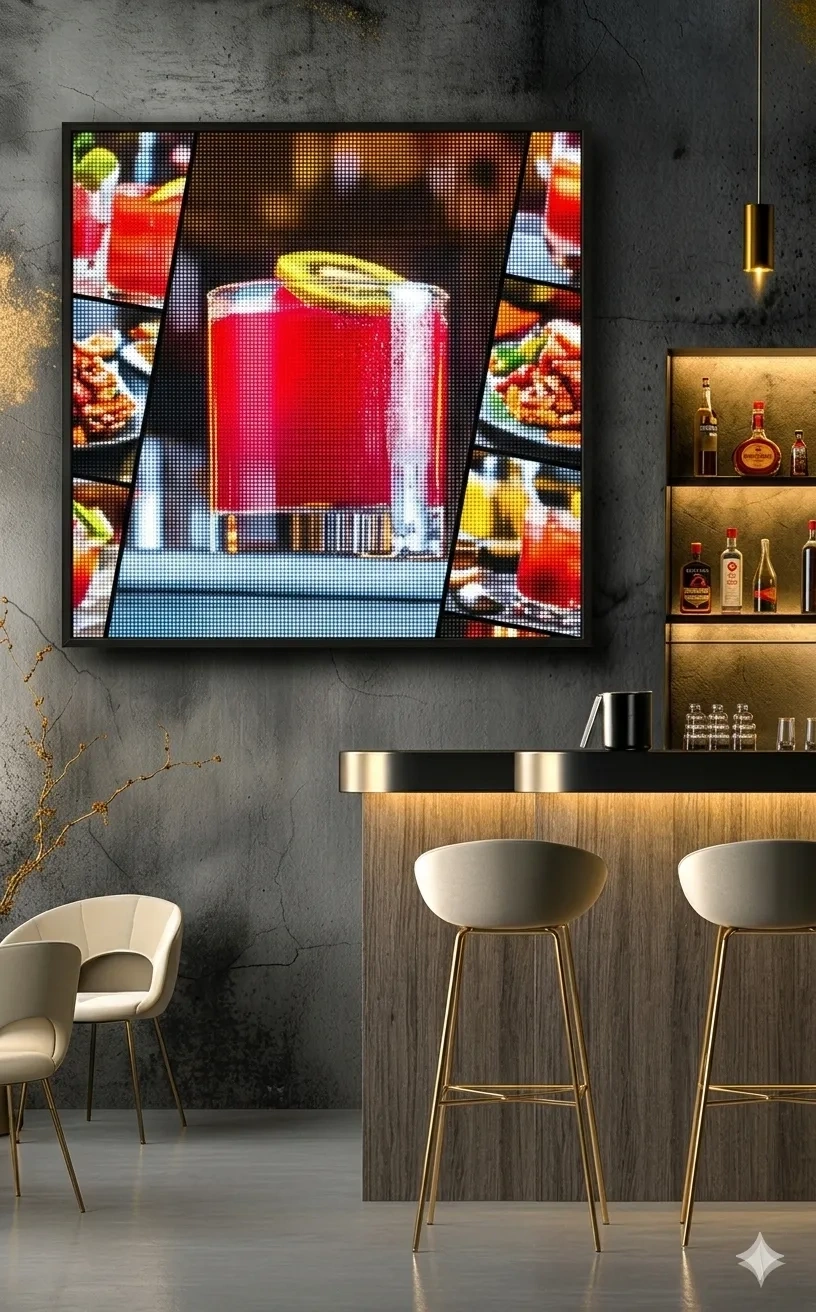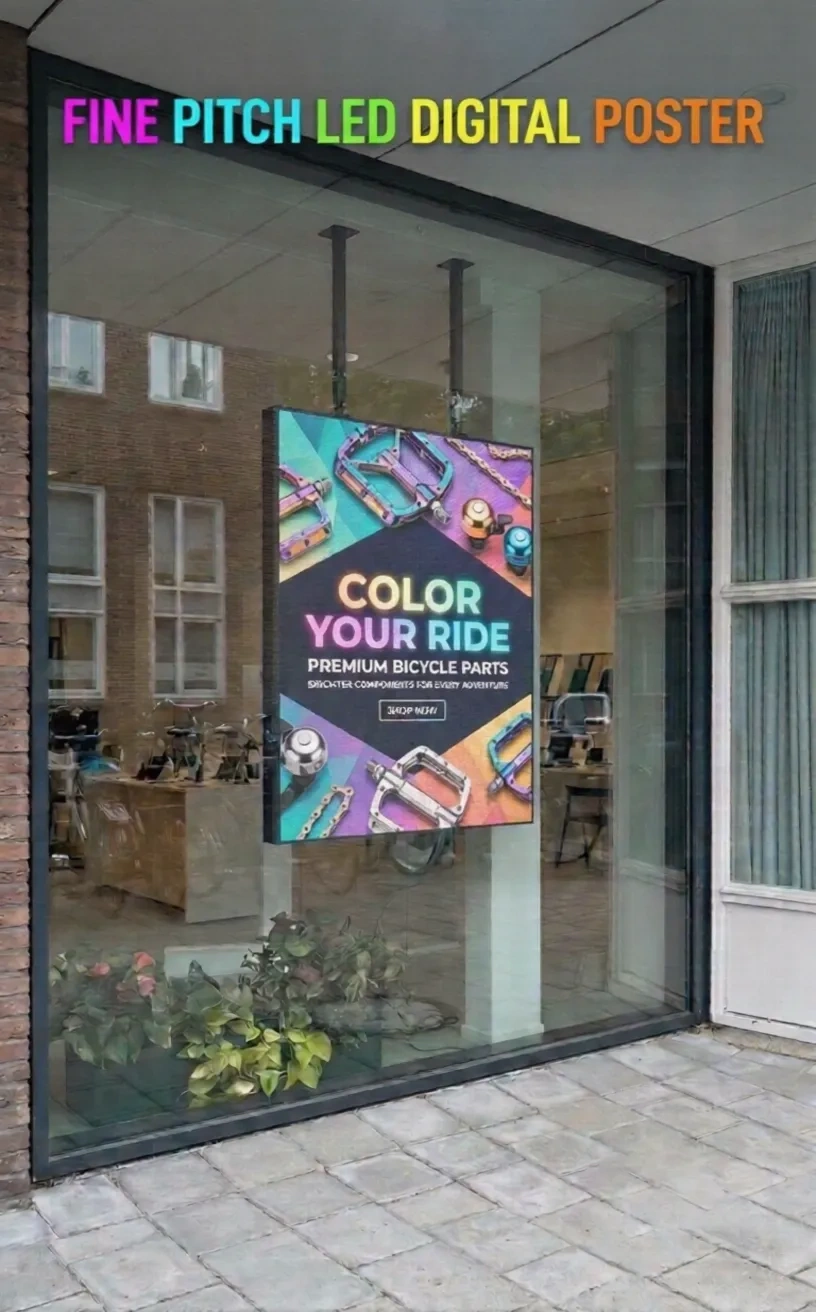

When people see our small-format LED display, they often ask:
“A 46-inch LCD can have 4K resolution. Why does this LED display have only 256 × 384 pixels?”
It is a fair question.
The short answer is that LED and LCD use different display technologies, pixel structures and typical applications. Resolution is important, but it is not the only factor that determines how a display performs in a real-world environment.
A 46-inch 4K LCD will naturally provide finer text and more detailed images when viewed up close. However, a storefront display may be viewed from several meters away and exposed to strong daylight. In this situation, brightness, pixel pitch, viewing distance, contrast and viewing angle also matter.
Here is why LED and LCD can both be the right choice for different applications.
1. Why Brightness Matters in Shop Windows
Traditional LCD screens can offer 4K resolution, but many commercial LCD displays have brightness levels around 500–700 nits. When strong daylight enters a shop window, the image can become less visible.
A high-brightness LED display is designed for this type of environment. With brightness of up to 4,500 nits, window-facing LED can maintain strong visibility even in bright storefront conditions.
This does not mean brightness is always more important than resolution. It means that different applications require different display characteristics.
2. Resolution, Pixel Pitch and Viewing Distance
A 4K LCD has 3,840 × 2,160 pixels, providing very high pixel density on a 46-inch screen. This is excellent for close-up viewing and detailed content.
Our 46-inch LED sample uses a 256 × 384 pixel configuration. While it does not provide the same fine-detail reproduction as a 4K LCD at close range, LED displays are viewed differently.
For LED, pixel pitch and viewing distance are important factors. When viewers are several meters away, individual LED pixels become much less noticeable, and the display can effectively deliver large graphics, video and advertising content.
This is why resolution should always be considered together with pixel pitch and viewing distance, rather than by pixel count alone.
3. Different Displays for Different Content
LCD is often a strong choice for content that requires fine detail, such as:
Small text
Detailed menus
Product information
Prices and specifications
LED can be a strong choice for visual advertising content designed to attract attention from a distance, such as:
Promotional videos
Brand logos
Large headlines
Product images
Animated advertising
For shop windows, wide viewing angles and high brightness can also be important because people may view the screen while walking past from different directions.
The Bottom Line: Different Screens for Different Jobs
LCD Displays — Great for Close-Up Information
4K LCD displays are well suited for dense, text-heavy content and detailed information that needs to be viewed from close range.
Indoor LED Displays — Great for Indoor Advertising
Indoor LED displays can provide higher pixel density and are suitable for dynamic advertising and graphics viewed at closer or medium distances.
Window-Facing High-Brightness LED Displays — Great for Storefronts
Designed for bright storefront environments, high-brightness LED displays can offer up to 4,500 nits, wide viewing angles and strong visual impact for advertising viewed from several meters away.
Choose the Right Display for the Right Place
LED and LCD are not simply a matter of which technology is “better.” They use different display technologies, pixel structures and are designed for different applications.
For close-up, fine-detail content, a 4K LCD can be an excellent choice.
For bright storefront advertising viewed from several meters away, a high-brightness LED display can be a strong alternative.
The right display depends on the viewing distance, content, lighting conditions and application—not simply on the number of pixels.